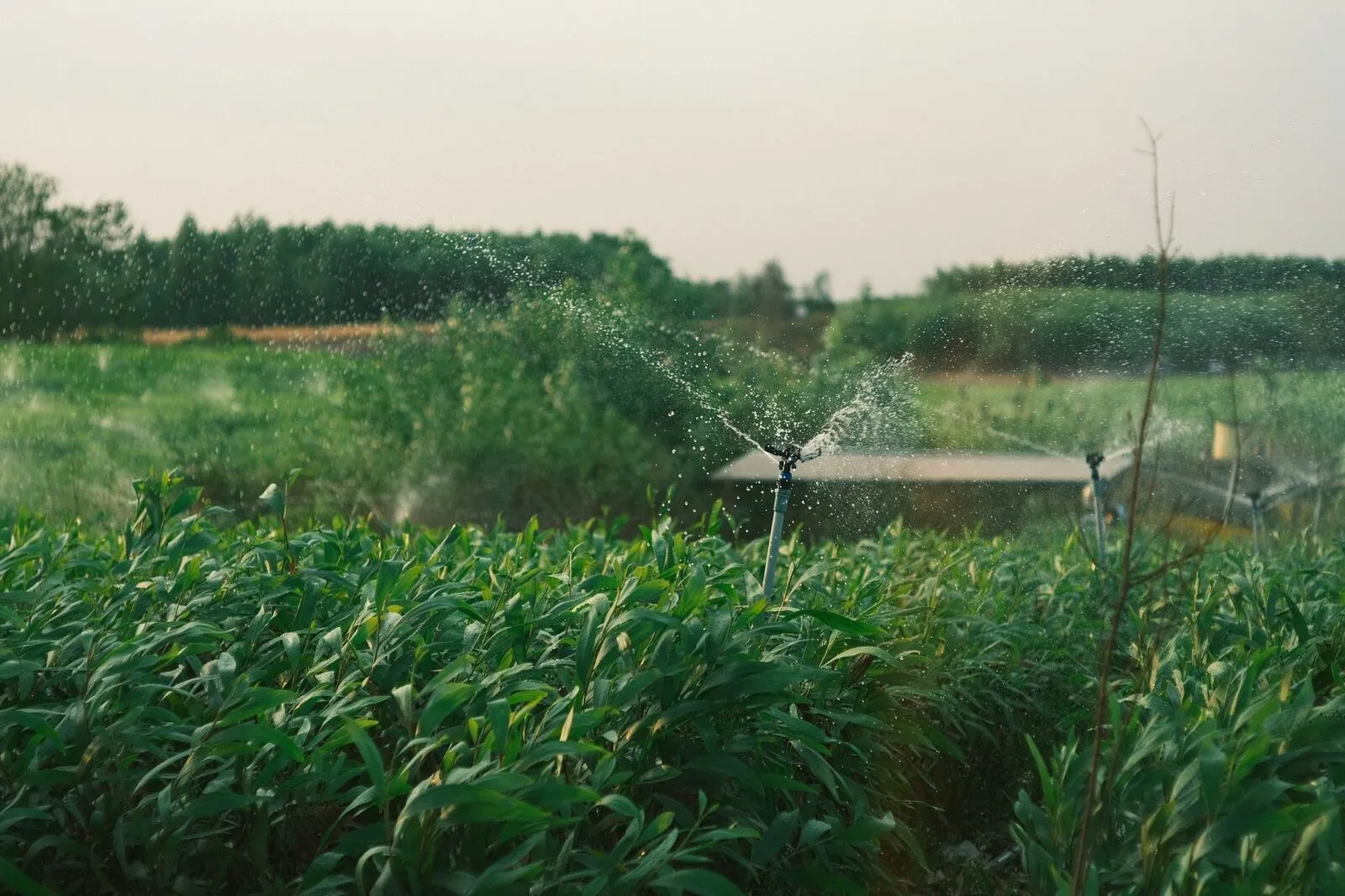
The math is brutal for American farmers: nitrogen costs are stuck at two to three times pre-2022 levels, grain prices are soft, and every dollar spent on synthetic fertilizer eats deeper into an already thin margin. That’s the squeeze that’s forcing a hard look at what actually builds long-term farm resilience.
Enter cover crops. A new wave of research out of Nebraska is proving what regenerative farmers have argued for years: planting cover crops in the off-season does more than build soil carbon. It traps water that would otherwise drain away and holds nitrogen in the field through winter, cutting what farmers need to spend on synthetics come spring.
How it works
The mechanics are straightforward, but the payoff is significant. When a field lies bare through fall and winter, rainfall and snowmelt drain straight through the soil, taking nitrogen with it. A cover crop—typically a legume like clover or vetch, or a grass like rye—covers the ground and roots deep. Those roots absorb nitrogen and moisture that would be lost, and they hold both in the soil profile.
Come spring, when the cover crop is terminated and worked into the soil, that sequestered nitrogen is available to the cash crop. The soil, enriched with organic matter, also holds more moisture, which means less irrigation needed in dry years. That’s especially valuable in a climate-change world where drought is becoming the norm rather than the exception.
Research from land-grant universities shows cover crops can reduce nitrogen requirements by 20-30% without sacrificing yield, but the Nebraska work goes deeper: it quantifies the water piece, showing how much moisture is trapped in the soil profile and how that reduces irrigation demand.
Why this matters now
For most of the past 50 years, synthetic fertilizer was cheap and abundant. Farmers could afford to be wasteful: apply excess nitrogen, waste water on over-irrigation, and assume the inputs would always be there and always be affordable. That era is over.
As we’ve reported, nitrogen prices have remained volatile and historically elevated since 2022, a shock driven by high energy costs and global supply constraints. At the same time, water stress is intensifying. Aquifers in the High Plains are depleting faster than they recharge, and drought cycles are becoming longer and more severe.
A farmer facing both high nitrogen costs and water scarcity has a choice: double down on technology (precision agriculture, advanced irrigation), which is expensive and requires constant inputs. Or build soil health through cover crops and crop diversity, which requires upfront investment in seed and equipment, but then pays dividends year after year.
The Nebraska research gives that second path hard numbers. If a farmer can cut nitrogen needs by 20-30%, that’s real money saved every year the cover crop is in rotation. And if that same rotation cuts irrigation demand, the savings compound.
Who’s moving on this
Cover crops aren’t new—farmers in the conservation and regenerative space have been running them for a decade or more. But adoption has been slow, especially in the commodity corn and soybean belt, because the payoff wasn’t immediate and the conventional playbook didn’t require it.
Young farmers and those operating on thin margins are moving fastest to regenerative systems that include cover crops, partly out of necessity. A 100-acre beginner farmer can’t absorb $600-per-ton nitrogen costs the way a 5,000-acre commodity operation can. Building soil biology and water retention is a way to survive on margins that won’t support high-input conventional agriculture.
The catch is timing. A cover crop rotation takes three to five years of investment before the soil biology is mature enough to deliver full nitrogen cycling benefits. A farmer in cash-flow crisis can’t wait three years. That’s why federal support—through USDA conservation programs and crop insurance incentives—matters.
What’s blocking wider adoption
Three things are in the way. One is upfront cost. A cover crop seed bill, plus the fuel and time to plant and terminate, runs $50-75 per acre per year. For a 1,000-acre operation, that’s $50,000-75,000 before you see any return. Many farms don’t have that cash available.
Second is risk. Cover crops are still unconventional enough in the commodity belt that a farmer trying them is experimenting on their own dime. Extension research helps, but the risk is real.
Third is the gap between policy and practice. The USDA’s Environmental Quality Incentives Program offers grants for cover crop implementation, but bureaucracy is thick. The application process alone can take months, and the cost-share is never enough to cover the full investment.
What comes next
The Nebraska data is part of a growing body of evidence that regenerative practices aren’t just good for climate and soil—they’re becoming economically rational for farmers trying to survive in a world where inputs are expensive and weather is volatile.
That doesn’t mean conventional farming will disappear. It means the farms that thrive in the next 20 years will be the ones that recognize that soil is infrastructure, not an input. And that building that infrastructure through cover crops and crop diversity is the strategy that wins when nitrogen stays expensive and water becomes scarce.
For policymakers, it’s a moment to stop treating conservation as a nice-to-have and start treating it as essential infrastructure. Loans that cover cover crop implementation, crop insurance products that reward low-input systems, and extension research that cuts the risk—those are the real investment.
The Nebraska research is a roadmap. Now it’s time to scale it.
Read more of our reporting on farmer organizing and solutions.


