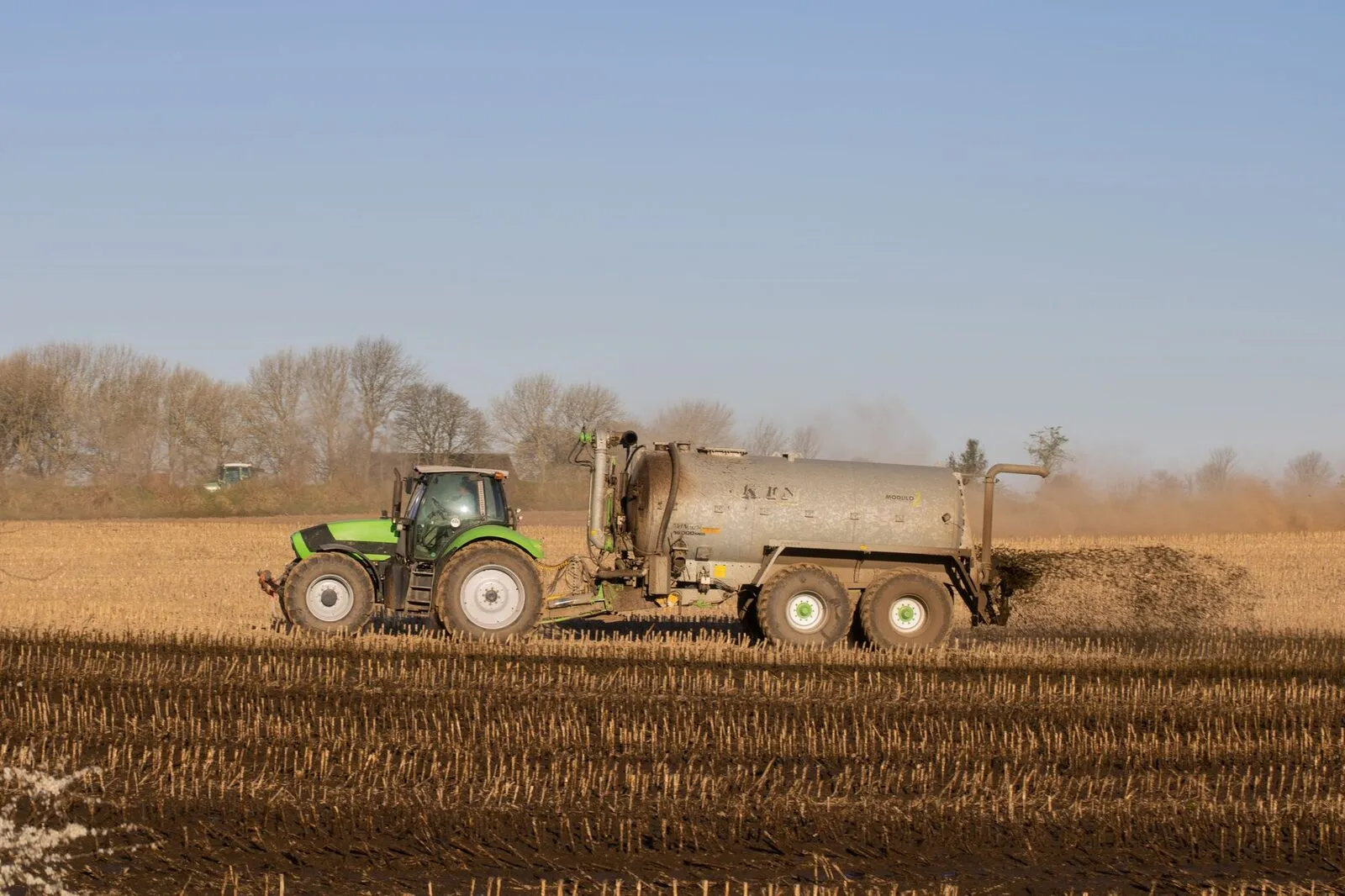
For decades, American farmers followed a formula: spray enough nitrogen to push yields to the edge of profitability, clean up the surplus with a tractor in the fall, repeat. It was wasteful, but it worked. The input cost was there, buried in the operating budget.
Today that math is shattered. Nitrogen fertilizer prices have remained volatile and historically elevated since 2022, forcing farmers to make the kind of choices they haven’t faced in a generation: reduce acreage, cut nitrogen rates, shift timing, or risk going underwater on the season.
Two Indiana corn farmers recently laid out those hard choices in Farm Progress. One decided to apply nitrogen later in the season to hedge against price swings. The other is cutting rates entirely, banking on soil health improvements from years of cover crop investment to offset lower synthetic input. Neither path is a win. Both are survival.
This isn’t a story about farming getting harder. It’s about the broken economics of American agriculture becoming impossible to ignore.
What broke
The industrial corn belt was built on cheap fossil fuel inputs. Natural gas, which accounts for about 80% of the cost of ammonia production, spiked in 2022 as Europe bid for LNG supplies following Russia’s invasion of Ukraine. Global nitrogen production contracted. Prices didn’t fall back to 2020 levels; they plateaued at a new floor that’s roughly double what farms were paying five years ago.
At the same time, grain prices have been soft. Corn futures have hovered in the $3.50-$4.50 range, far below the levels that made high input costs pencil out. That’s the wedge: when nitrogen costs $600-$800 per ton and corn sells for $3.80 a bushel, the margin evaporates before you even account for fuel, equipment, or land rent. As we reported earlier this month, farmers are struggling with rising costs in a volatile market, and the nitrogen crunch is just the sharpest edge of that blade.
The USDA’s own farm income data tells the story. Median farm profitability has declined as input costs have risen faster than commodity prices, squeezing the operating margin to levels not seen since 2016. For farms heavily leveraged on debt (and most corn-belt operations are), that squeeze becomes a crisis.
How farmers are adapting
The immediate moves are crude. Reduce rates. Skip a pass. Plant less. But some farmers are using the price shock as a forcing function to change what they’re actually doing.
Cover crops absorb and retain nitrogen naturally. A farmer who’s been running a cover crop rotation for five years has a buffer: soil organic matter holds nitrogen through the winter, and biology does some of the work that synthetics used to buy. Research from land-grant universities consistently shows cover crops can reduce nitrogen requirements by 20-30% without sacrificing yield, but you have to be in the rotation long enough to see the payoff. That shift toward soil health and biological inputs is part of a broader 2027 crop crisis unfolding around fertilizer costs.
Precision application helps too. Instead of blanket applications, farmers with access to soil testing or remote sensing can target nitrogen to where the crop actually needs it. The USDA’s NRCS has grants for these tools through the Environmental Quality Incentives Program, though accessing them is a bureaucratic slog.
The reckoning is especially sharp for young farmers and those operating on thinner margins. A large-scale operation might absorb higher nitrogen costs by spreading them across more acres. A 100-acre beginner farmer can’t. That’s one reason why regenerative agriculture and low-input systems are seeing real adoption among younger growers, even as the corn belt establishment still runs the high-input playbook. Equipment sales have collapsed for many farm operations as farmers cut capital spending in response to margin pressure, and that retrenchment is forcing a hard look at what actually drives long-term profitability.
What this means
Fertilizer prices won’t collapse back to 2020 levels. The global market has shifted, and energy costs aren’t going backward. That means the next harvest, and the one after, will force this same reckoning.
For policymakers, it’s a moment to double down on infrastructure: soil health, long-term crop insurance that rewards low-input systems, real investment in biological nitrogen fixation and alternative sources. The USDA’s 2023 USDA Climate Resilience Regional Challenge is a start, but it’s underfunded relative to the scale of the problem.
For farmers, it’s a recognition that the cheap-inputs era was an anomaly, not normal. The farmers who build soil health, diversify their rotations, and invest in precision now are building businesses that can survive when nitrogen costs stay high. The ones betting on a return to $400-per-ton ammonia are betting against economics.
The nitrogen shock isn’t the fight. It’s a mirror for the larger fight: whether American agriculture can survive as currently structured when its fundamental economics are broken.
Read more of our reporting on farm debt and costs.


