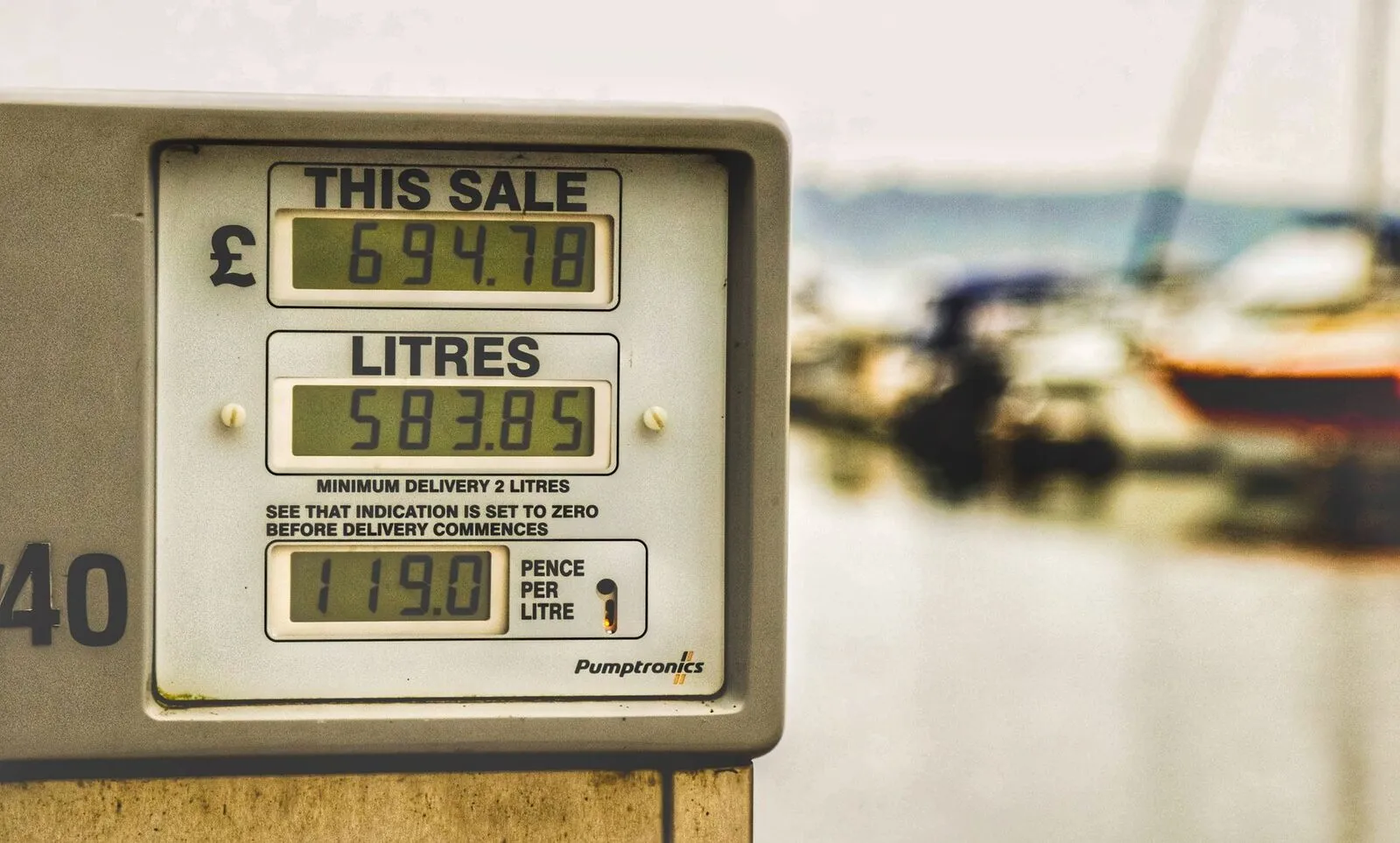
The harvest tightens around a hard truth: fuel costs are still eating into margins across the Southwest. Diesel prices continue to hover above $6 per gallon, squeezing farmers who are already running lean on cash flow and deciding between fuel consumption and profit.
When diesel costs six bucks a gallon, the math breaks down fast. A 4,000-acre operation burning 5 gallons per acre for harvest runs the tab to $120,000 just in fuel for one season. Add post-harvest tillage, spring fieldwork, and hauling, and that number climbs hard. For farmers working on 3-5 percent net margins, that’s not a line item. That’s the difference between paying the bank or taking on fresh debt. And for Southwest operations where water costs are already climbing and input needs are higher per acre than in the Midwest, the hit is sharper.
Three Southwest growers told Farm Progress this week how they’re adapting. Their strategies are practical and unglamorous: cutting engine idle time during breaks, adjusting tillage practices to require fewer passes over the field, staggering equipment replacements, and running older iron longer while they build capital again. One farmer is exploring strip-till to cut fuel consumption by 30 percent per pass. Another is leaning on custom applicators instead of buying his own equipment outright, shifting the fuel burn to someone else’s bottom line. For some, it means a smaller operation next year, scaling back acreage or switching to less input-intensive crops. For others, every gallon saved is the difference between staying afloat and taking on more debt.
The calculus is brutal. Strip-till saves fuel but requires purchasing new equipment or custom hire charges. Running older equipment longer stretches maintenance costs and breakdowns happen at the worst times. Hiring custom applicators means giving up control of timing and paying someone else’s margin on top of their fuel. None of these options are actually solutions. They’re just different ways of absorbing a cost that family farms have no power to negotiate.
This is the operating environment farmers face right now. Tight margins have become the permanent operating condition for family farms, not a temporary crisis. The fertilizer situation heading into 2027 remains a major cost pressure, and now diesel adds another layer that farmers can’t absorb through efficiency alone. When input prices move faster than commodity prices, margins collapse. The Southwest’s squeeze mirrors what farmers nationwide are already struggling with in volatile markets.
The timing of a recently announced USDA relief program could help, though farmers are cautious. Diesel relief measures have appeared before, temporary and often slow to roll out, and bureaucratic gates often exclude the smallest operations or those with debts exceeding certain thresholds. The jump to six dollars per gallon reflects structural problems in fuel markets, refinery capacity, and global energy prices, and farmers absorb the cost entirely. There’s no market mechanism that lets a family farm pass this cost along to buyers.
The real pressure sits in the structural disadvantage. Farmers can’t stockpile diesel the way large industrial operators with capital can. A family-farm operator working with seasonal cash flow has to buy fuel when they need it, at whatever price the market is charging. A large corporation can hedge fuel contracts months out, negotiate bulk rates, or finance storage at favorable terms because they have credit lines and balance sheets to support it. That advantage in timing and pricing keeps widening, and it compounds across every input season after season. When diesel is cheap, big ag buys in bulk and locks in rates. When it’s expensive, they’ve already positioned themselves. Family farms just buy at the pump and hope margins hold.
Some farmers are exploring long-term solutions. Cover crop and minimal-till systems can reduce fuel consumption and increase soil water retention, cutting engine hours and pass count. But the upfront transition costs and learning curve keep these practices out of reach for farmers already underwater. Regenerative approaches offer promise but require capital most family farms simply don’t have right now. It’s the same pattern across agriculture: the solutions exist, but they’re locked behind a capital gate that only industrial-scale ag can clear.
For farmers fighting to stay independent, diesel at six dollars is another toll. Relief programs help. Better fuel pricing helps. But what really helps is a farm economy where family operations aren’t structurally disadvantaged every time global energy markets shift or refinery capacity tightens.
Read more of our reporting on farm debt and costs.


