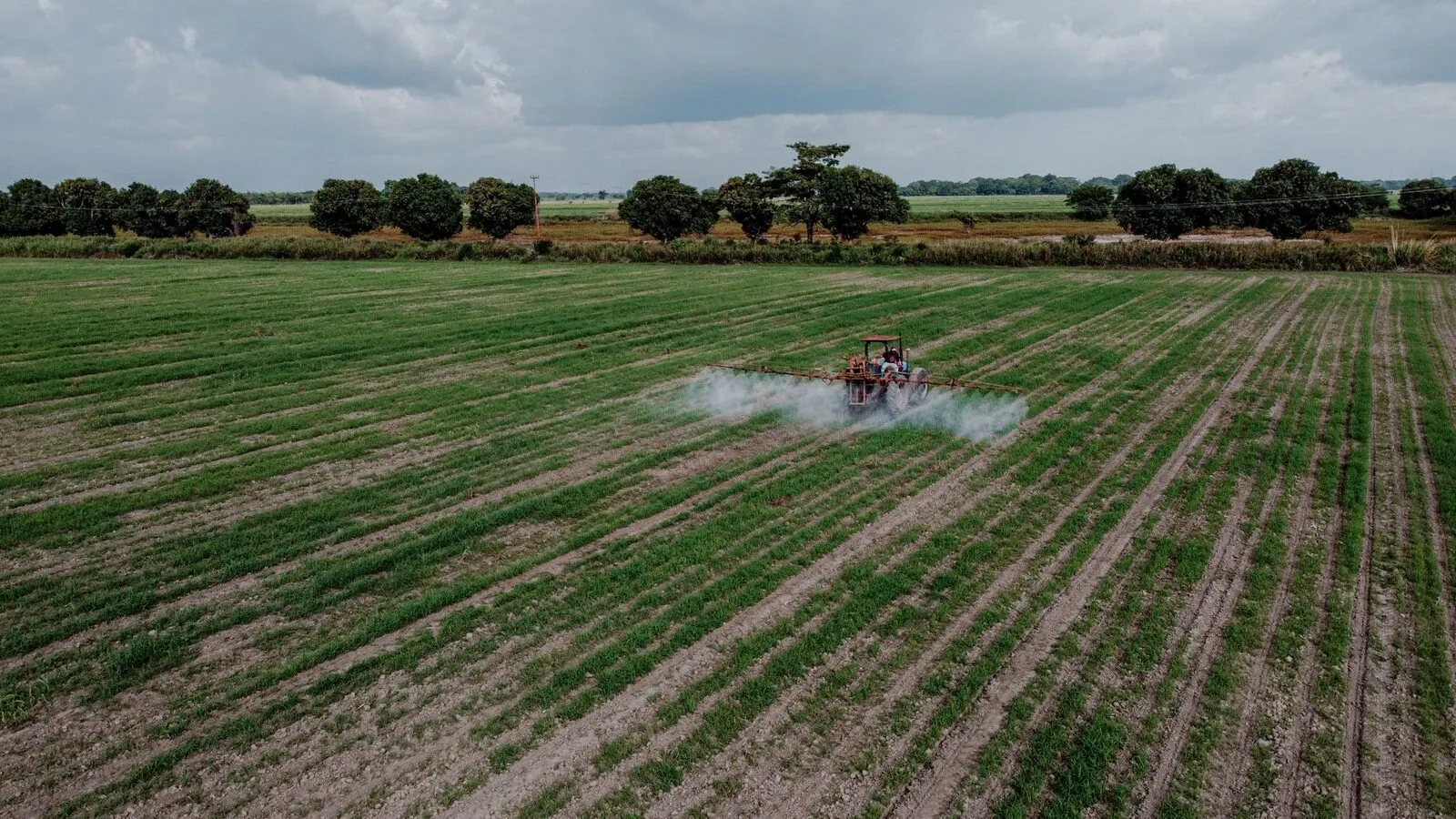
A new analysis from the Environmental Working Group finds that roughly one out of every four public elementary and middle schools in the country sits close enough to a crop field to be in the path of pesticide spray. The findings were published November 5 by EWG alongside an interactive map.
What EWG found
According to the analysis, 19,208 public elementary and middle schools are within a quarter-mile of a crop field that could be treated with pesticides. Almost 7 million students attend those schools. Another figure sits closer in: 1,932 schools are within just 200 feet of a field, and more than 575,000 students attend schools that near.
EWG says 200 feet is close enough for harmful drift to reach classrooms and playgrounds. The group also points to research showing pesticides are often detected inside homes as far as a half-mile from spraying.
The map uses what the Department of Agriculture considers a crop field. It counts a school if it has at least one grade from kindergarten through eighth. It does not include public high schools or private schools, and it leaves out the parks, playgrounds and ball fields where kids play that may also be sprayed.
State by state
EWG says the problem is nationwide, not just a farm-belt issue. Its examples:
- New York: over 550 schools within a quarter-mile, totaling over 200,000 students.
- Ohio: almost 1,000 schools and 400,000 children.
- Florida: over 270 schools and almost 150,000 children.
- Colorado: 340 schools and over 100,000 children.
- Vermont: more than 71% of the state’s schools.
The map also lets users look up their own county, congressional district or state legislative district.
The gap EWG is pointing at
The core complaint is not only proximity. EWG argues that families lack basic protections such as buffer zones and warnings, and that parents cannot easily learn when pesticides are applied near a school, who is applying them, what is being applied, and what precautions are in place.
EWG says children face higher risks because their developing bodies and nervous systems are more vulnerable to chemical toxicity. The group cites studies linking living near pesticide spraying to harm to the respiratory system, increased cancer risk, and harm to the developing fetus such as low birth weight and reduced IQ. It also cites the American Academy of Pediatrics on children’s susceptibility.
Worth keeping in view: this is an advocacy group’s exposure estimate based on distance to mapped cropland. The map shows where schools are in a potential “spray zone,” not which fields were actually sprayed, with what, or when. Proximity is a risk screen, not a measurement of what any child was exposed to.
The policy ask
EWG and Consumer Reports are urging Congress to reject any new pesticide laws unless they include what they call the Consumer Pesticide Safety Bill of Rights. EWG says it addresses long-running gaps in pesticide protection and includes a call to ensure children are safe from pesticide exposure while at school.
That fight lands in a busy moment for food and chemical policy. For the state-level side, see our look at the patchwork fight over state food chemical laws. For another case of farm-adjacent contamination reaching communities, see our coverage of PFAS in biosolids and a Maine farm’s response.
What to watch
- Whether any state legislature picks up school buffer zones or advance spray notification after seeing its own county numbers.
- Whether Congress takes up pesticide legislation and whether school protections are part of it.
- Any response from agricultural groups or regulators to EWG’s methodology, which we will report if it appears.
More on this beat is on our poisoned ground page.


