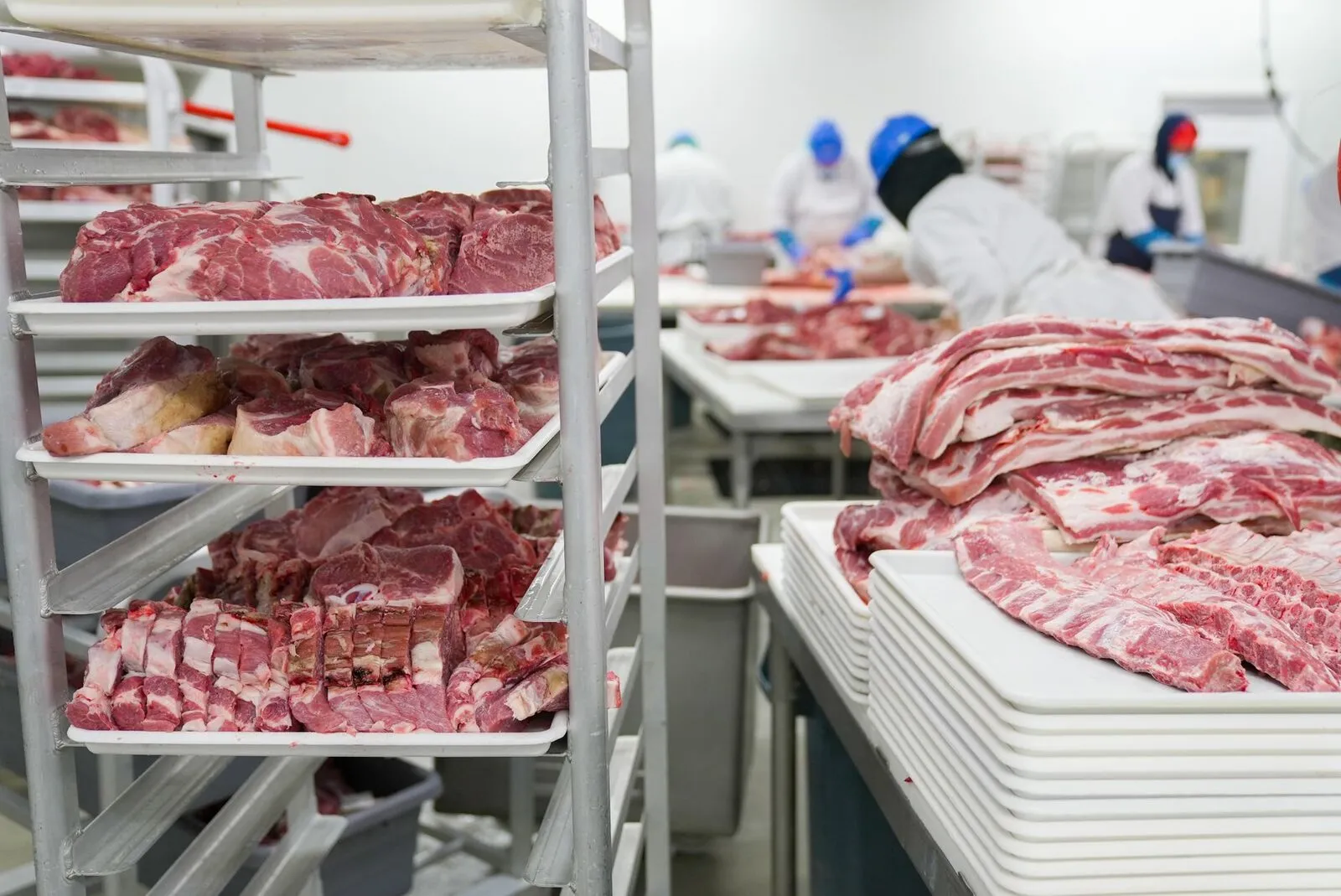
The Trump administration is exploring ways to cut regulations on beef processing plants, citing the need to spur construction of new facilities and boost domestic meat supply. It’s a sympathetic pitch: open up the rules, the theory goes, and more processors will enter the market, breaking up the stranglehold a handful of giants hold on American beef.
The reality is more complicated and more dangerous.
Four companies control over 80 percent of U.S. beef processing. Tyson, Cargill, JBS, and National Beef move nearly all cattle from ranches to retail. That concentration means ranchers have almost no negotiating power; processors can dictate the price they pay for a finished steer. Cut labor and safety rules, and those same four companies benefit most. They already have the scale, infrastructure, and legal teams to navigate complex compliance. Smaller competitors don’t.
Deregulation sounds like a competition fix. It’s actually a consolidation accelerant.
The rules being targeted include slaughter line speeds, worker safety (heat protections, reasonable break schedules), and facility hygiene standards. These exist because workers at high-speed plants suffer injuries at rates far exceeding other industries and because food-borne illness outbreaks trace directly to inadequate hygiene enforcement. When USDA inspectors were crowded out during fast-speed operations, contamination rates climbed.
From a Big Four perspective, deregulation is gold. They can absorb more workers at higher injury risk, operate facilities with tighter margins, and undercut any new entrant trying to build a plant with reasonable labor standards. Smaller operations either match the low-cost model or go out of business. The giant gets bigger.
Ranchers and growers understand this dynamic. Many advocacy groups have pushed for stronger, not weaker, consolidation rules in meatpacking, recognizing that processor power directly translates to lower farm-gate prices. But consolidation fights move slowly through courts and Congress. Deregulation moves fast.
The administration’s framing assumes that new plants will emerge if rules soften. The capital barrier is real: building a USDA-compliant processing facility costs hundreds of millions. But the industry knows this. If deregulation were the binding constraint on new plants, the industry would have lobbied for it decades ago. The real barriers are capital, proximity to supply, and the difficulty of competing on price against established giants who control supply contracts.
What deregulation does accomplish is clear: it shifts the cost of worker injury, foodborne illness, and environmental damage onto workers and consumers. It concentrates further market power toward the four incumbent giants. It depresses rancher prices by making the low-cost, high-injury model more profitable.
The political argument—that cutting beef processing rules will help ranchers and consumers—doesn’t square with beef economics. Ranchers are already bracing for lower prices as the administration formalizes beef import expansion. Adding cheap imports to a processing system where the Big Four can squeeze both ranches and workers makes consolidation more likely, not less.
Some in the administration may genuinely believe that deregulation spurs competition. The track record suggests otherwise. In meatpacking, concentration grew precisely as regulatory gaps widened. The solution to processor consolidation is enforcement, not deregulation: applying existing antitrust law, restricting vertical integration, capping processor market share, and supporting regional alternatives.
Ranchers and ranching organizations are divided on deregulation. Some see any supply-side increase as positive. Others recognize that four processors competing at 80% market share isn’t competition at all. The real competitive fix would require rebuilding processing capacity outside the Big Four, a multi-billion-dollar public investment that deregulation does nothing to enable.
For now, the administration is floating the idea. If it moves forward, watch for two signals: whether new processors actually emerge (unlikely), and whether rancher prices fall further as the Big Four can operate with lower-cost labor and looser environmental rules. The market will answer fast.