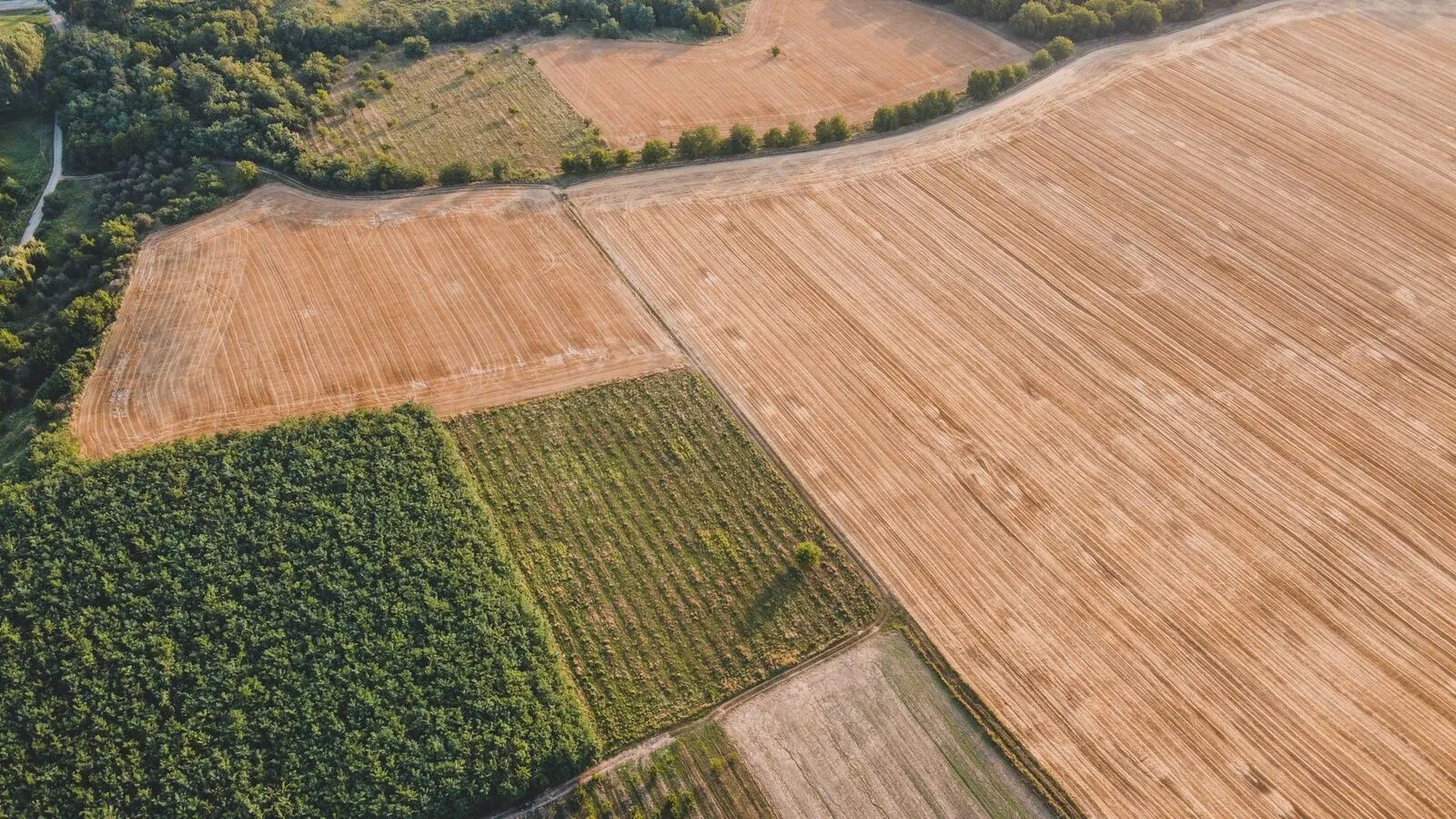
The numbers are staggering and largely invisible to the public. By 2029, nearly 15% of American cropland—roughly 44 million acres—will transition ownership. Not through steady generational handoff, but through consolidation: a cascading series of forced sales, acquisitions, and buyouts driven by debt, aging ownership, and the sheer market power of corporate agriculture. The data, unveiled this month at the 2026 Top Producer Summit by Farm Journal Intelligence, maps a reckoning that has been decades in the making and is now accelerating.
The picture by farm size is dire. Fifty-eight percent of small farms—operations under $250,000 in gross income—face “at risk” status for sale or acquisition before 2030. Even mid-size operations aren’t safe: farms between $250,000 and $500,000 in revenue face 48% consolidation risk. The risk never drops below 27%, even for large operations in the $2.5 million-plus range.
The Midwest is the epicenter. Roughly 12 million of the 44 million acres projected to transition are concentrated in the nation’s farm heartland, where the combination of aging farmer populations, tight credit, and rising operational costs have made succession impossible without selling out.
Why It’s Happening Now
The farm debt crisis is the engine driving consolidation. Chapter 12 bankruptcies surged 130% in April 2026—the highest monthly total since February 2020—as input costs, interest rates, and compressed commodity margins push operators into formal insolvency. Younger farmers can’t enter the market because land prices are inflated to levels that assume consolidation. Existing operators can’t afford to stay if they have no debt-free successor ready to take over.
When a farmer dies or retires without a succession plan, the heirs face a choice: keep managing the operation (expensive, risky, requires farm knowledge) or liquidate. Consolidators—investment firms, private equity, and larger agricultural operators—are ready with cash. And unlike a family succession, a consolidation is quick and decisive.
The data on succession planning is grim: only 34% of growing agricultural operations have a formal succession plan. For operations identified as “at risk,” just 21% have a documented plan in place. That planning gap is a gateway for consolidators.
Who’s Buying
The buyers aren’t necessarily farmers. Private equity firms, pension funds, and other multinational corporations are acquiring farmland across the U.S., betting on land as an appreciating asset. These entities don’t need to farm profitably—they profit from land value appreciation and tax benefits. They can afford to outbid family farmers and hold land speculatively.
Foreign investment in U.S. farmland has been constrained by new USDA enforcement (AFIDA regulations), but that has only redirected consolidation pressure toward domestic corporate buyers. The result is the same: family farms become tenant operations, working land they don’t own, paying rent to absentee landlords who have no interest in soil health or farm survival.
The Resistance Angle
Not everyone is resigned. Federal courts have begun checking the consolidation wave, ordering the USDA to restore half of cancelled grants for beginning farmers that the Trump administration tried to cut in March. And a new generation of farmers is choosing regenerative agriculture and shorter supply chains as a way to resist the consolidation game altogether, building local food systems that don’t depend on corporate scale.
But those efforts are counterweighted by policy. Federal crop insurance and subsidy programs reward larger operations that can achieve scale. Input costs—seed, fertilizer, equipment—are cheaper for bulk buyers, giving consolidators a permanent cost advantage over family operations trying to survive on their own.
The Farmland for Farmers Act, reintroduced in Congress this year, would impose restrictions on farmland purchases by non-farming entities. But the bill has stalled, and without it, the consolidation engine keeps running.
The Math of Displacement
Forty-four million acres sounds abstract until you translate it to farms. If the average farm is 463 acres, that’s roughly 95,000 family operations transitioning out of family control by 2029—some through sales, some through foreclosure, some through quiet dissolution when an aging farmer simply stops operation and the heirs can’t afford to restart.
The rural economies built on those 95,000 farms—the towns, the co-ops, the equipment dealers, the grain elevators, the veterinarians—lose their customer base. When farming consolidates, rural America dies a slow death.
USDA forecasts put farm sector debt at a record $624.7 billion for 2026, with interest expenses alone at $33 billion. That debt load is the financial pressure that makes family farms vulnerable to consolidation in the first place.
The 44 million acres isn’t just a prediction. It’s a trajectory. And unless policy or credit conditions change dramatically, the acceleration will continue.
Sources: