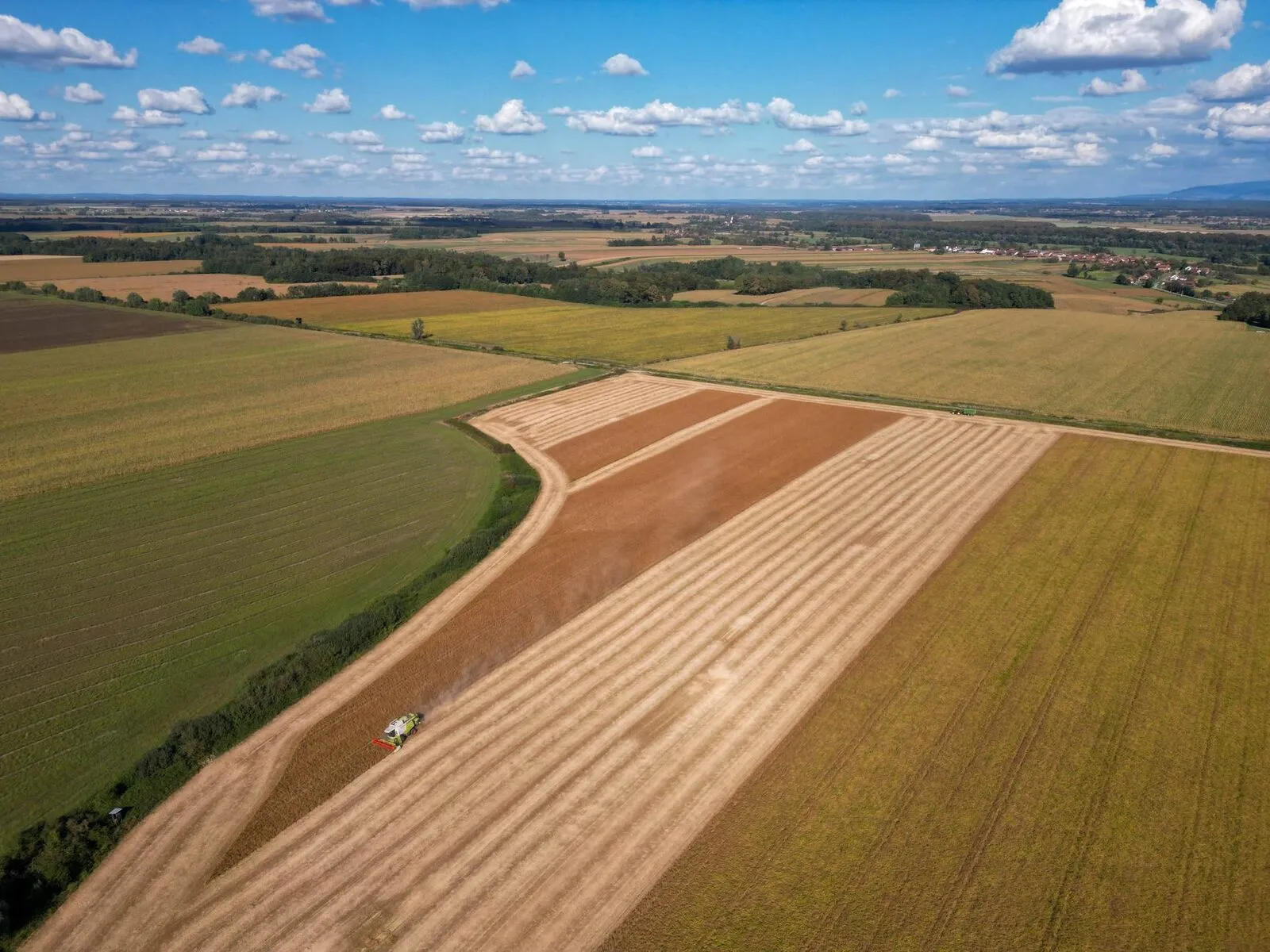
The structural squeeze on American farmland just got a lot tighter. Research from Farm Journal Intelligence tracking land transitions shows that nearly 15% of American cropland — 44 million acres nationwide — is projected to change hands within the next three years. The Midwest is the epicenter, with roughly 12 million acres likely to transition, but the pattern is national.
The drivers are familiar: generational transfer gaps, falling commodity prices, and input costs that never seem to drop. What’s new is the scale of the consolidation risk, and the fact that size offers little protection.
Small farms are in the crosshairs. 58% of small farms are “at risk” for sale or acquisition before 2030, according to the research. But even larger operations aren’t safe — the consolidation risk never drops below 27%, even for the biggest players. The math is brutal: only 50% of farmers are profitable in 2026, with $44 billion in projected losses. For context, 15,000 farms closed or consolidated in 2025, mostly small operations.
The consolidation is happening throughout the supply chain. Fewer equipment dealers, fewer seed suppliers, fewer buyers for commodity crops — farmers are left with fewer negotiating partners and thinner margins. When the economic squeeze tightens, exit becomes the rational choice. And when small farms exit, acres consolidate into larger operations or land rolls into corporate portfolios.
The response from Capitol Hill has been to reintroduce the Farmland for Farmers Act, which would curtail corporate and foreign ownership of agricultural land and keep farmland in farmer hands. It’s a band-aid on a hemorrhage — because the real consolidation driver right now isn’t foreign speculators or PE roll-ups; it’s the economics of commodity farming itself.
The clock is running. With more than half of U.S. farmers expected to retire over the next decade, the transition is less a three-year blip than a cascading reshuffling of who owns and operates American farmland. If the next generation of farmers can’t afford the land, the next decade won’t be a generational transfer — it’ll be a generational purge.
The irony: the most viable expansion opportunities for larger operations are concentrated in Kansas, Texas, North Dakota, Missouri, and Oklahoma. The map of consolidation is already drawn.