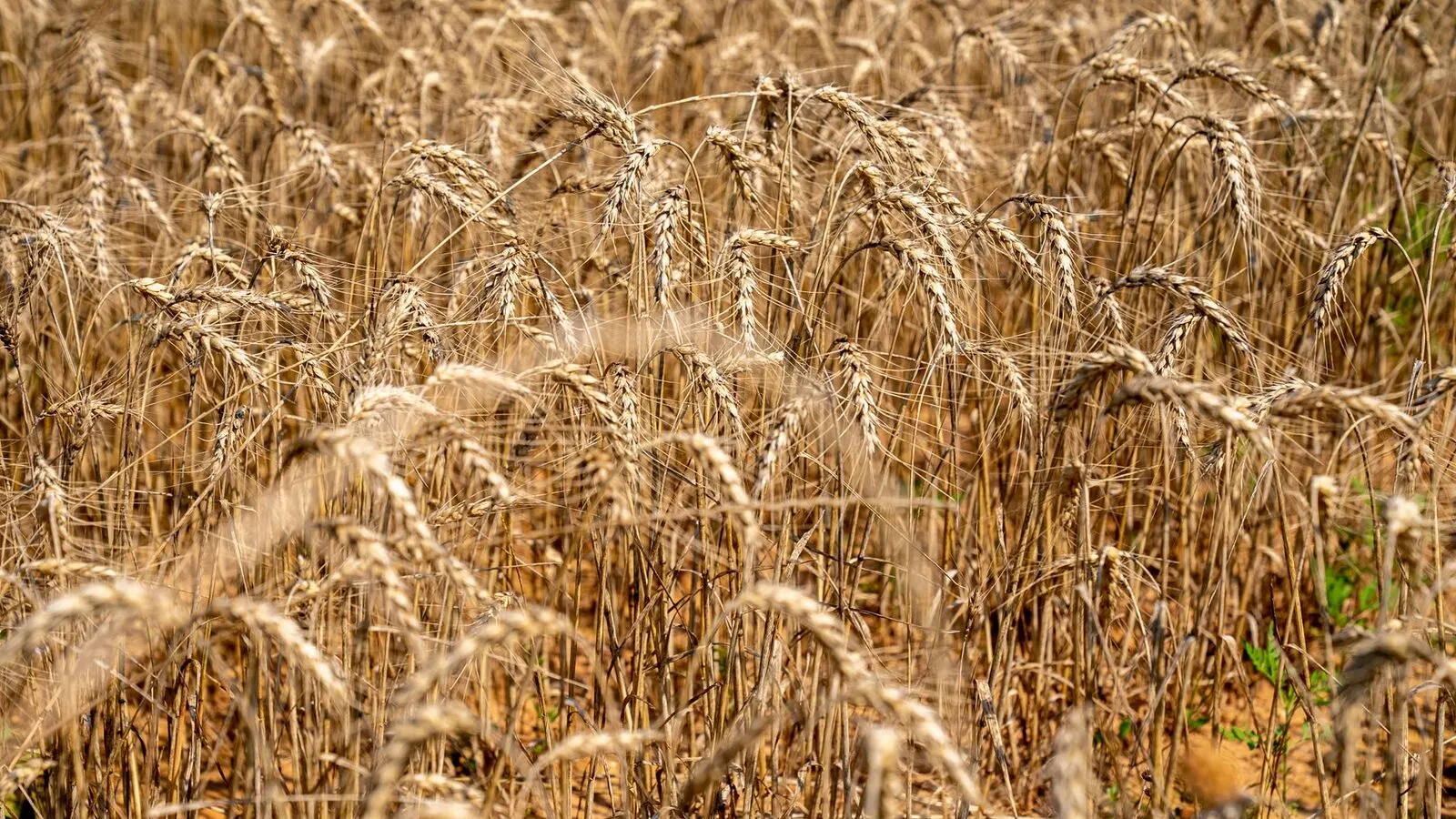
The U.S. wheat crop just collapsed. The USDA’s National Agricultural Statistics Service reported July 10 that the 2026 winter wheat harvest is forecast at 990 million bushels—a 29% plunge from last year and the smallest all-wheat crop since the early 1970s. For the bread-wheat backbone of American agriculture—hard red winter—the numbers are catastrophic: 471 million bushels, down 41% year-over-year.
The culprit is biblical drought in the central and southern Plains. Year-over-year yield declines of 20 to 50 percent blanket western Kansas, eastern Colorado, and the Oklahoma and Texas panhandles. Winter wheat condition ratings ran 20-plus points below every recent year since early April. The drought didn’t just steal bushels; it rewrote the acreage maps—USDA lowered estimated wheat plantings to 42.74 million acres, the lowest in USDA records going back to 1919.
Wheat’s decline cuts deeper than crop yields. Commodity markets are already pricing the squeeze: hard red winter wheat is trading at $6.50 per bushel, up $1.50 from last year as markets brace for scarcity. That sounds like good news for surviving growers, except it isn’t—higher input costs, debt service on acres that won’t produce, and thin margins on other crops mean most Plains farmers won’t see relief. They’ll absorb the loss.
This is the cascading crisis that the farm debt spiral has been building toward. When commodity prices cratered and input costs stayed high, Chapter 12 farm bankruptcies spiked. Now, weather is erasing the crop entirely on millions of acres. Farmers who gambled on spring plantings, who locked in debt loads expecting normal yields, are now looking at near-total losses on their largest revenue crop.
The USDA’s economic models assume farmers can smooth shocks across years, carry forward crop insurance payouts, or refinance. That math broke for smaller operations years ago. It’s breaking now for mid-sized farms in Kansas and Oklahoma that took on debt when wheat prices were higher and input costs felt manageable.
The one geographic exception is striking: record-high yields are forecast in Illinois and Michigan, and Washington’s yield is actually up 1.5%—a reminder that this is a Plains collapse, not a national one. The Midwest and East had adequate moisture and heat. But the Plains, which produces the nation’s bread-wheat, got neither.
The USDA is already moving to soften the blow. In early July, USDA opened the Strengthening Processing for U.S. Ranchers (SPUR) program with up to $500 million in payments to beef processors, signaling the administration sees crisis-level pressure on livestock operations and supply chains. Wheat farmers will have crop insurance to claim, though insurance payouts typically lag months behind losses, leaving a cash-flow gap. And for farmers already over-leveraged, a bad year compounds into the next one.
The immediate question for Plains farmers: Can they replant for fall crops, or do the economics not pencil? For creditors and co-ops watching their balance sheets, the calculus is starker. Another major loss in a region that’s already lost thousands of operations to consolidation and foreclosure.
Wheat’s collapse is one piece of a broader commodity shock. Corn and soybean estimates are holding up better, though futures are volatile. But wheat is political and personal in the Wheat Belt. This isn’t abstract farm economics—it’s Kansas and Oklahoma households deciding whether to stay on land their families have worked for generations.
What to watch: The USDA will revise these estimates in August and September as harvest data rolls in. Farmers’ crop insurance claims will begin filing in August. Look for the first wave of emergency loan applications at USDA Farm Service Agency offices by late July.
Save US Farms Desk