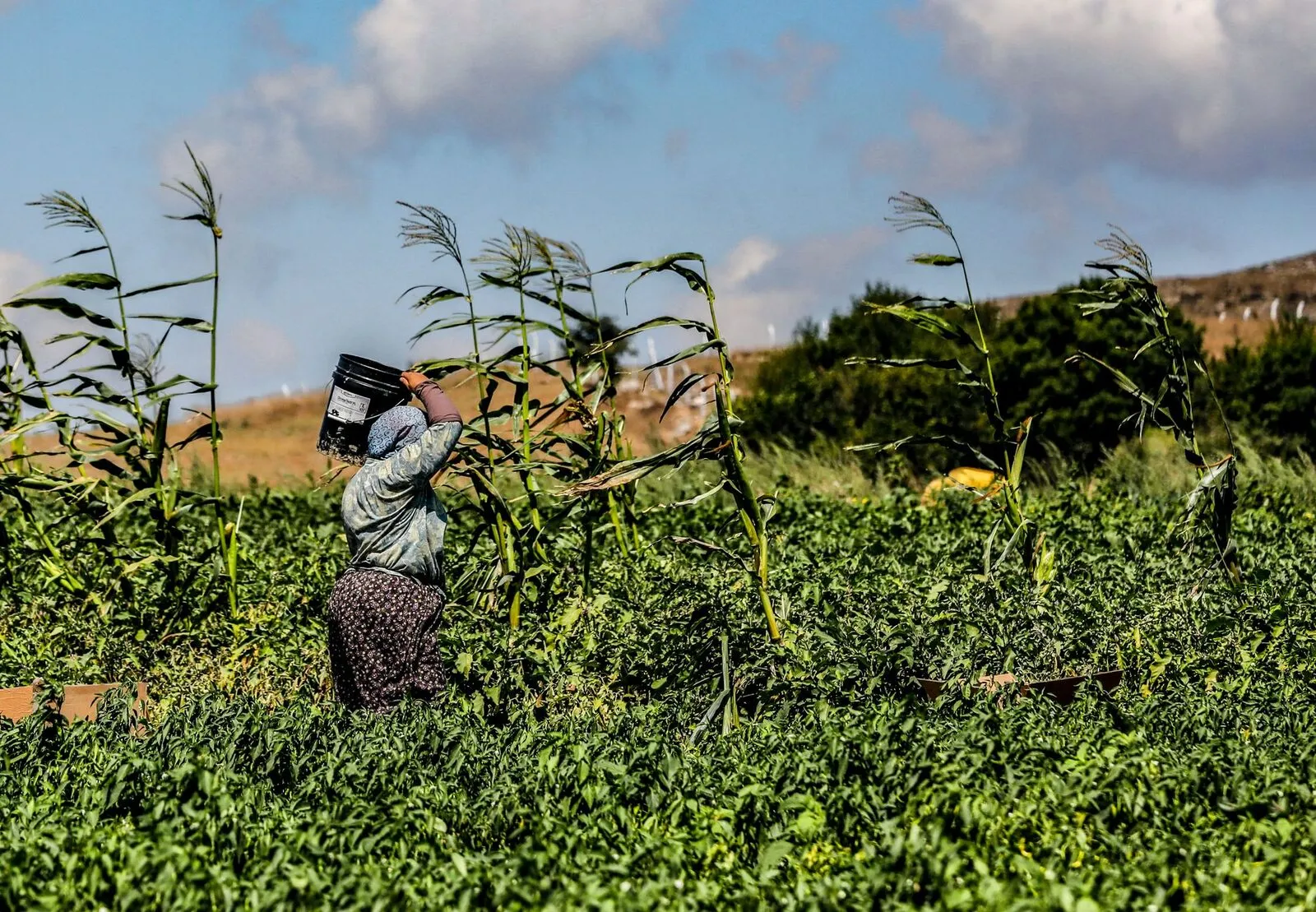
A federal court has blocked wage cuts for seasonal farmworkers, ruling that employers cannot reduce pay for workers once a season begins. The decision puts nearly 400,000 farmworkers in line for back pay and marks a rare judicial win for workers in an agricultural labor system stacked against them.
The ruling comes as farms across the country face a labor crisis. With the federal government vacating the H-2A wage rule in October, the legal floor for farmworker pay collapsed into uncertainty. The court’s decision on wage cuts operates independently of that wreckage, but it signals that at least some judges see farmworker protection as non-negotiable even when policy makers don’t.
Farm seasonality has always been the exploit. Workers arrive for harvest—picking tomatoes, cutting tobacco, pulling potatoes—with contracts that promise a set wage. Mid-season, when workers are locked in geographically and financially, some operators reduce rates. A worker who arrived for $15 an hour finds themselves making $12, with no alternative but to accept the cut or leave mid-harvest with no earnings at all. That’s a choice between wage theft and homelessness for a family living paycheck to paycheck.
The court ruled that cut illegal. Once a wage is set, it stands. The nearly 400,000 workers affected could reclaim the difference.
The decision echoes patterns in recent farmworker litigation. A prior ruling over H-2A overtime protections showed that courts will sometimes defend workers when the Department of Labor won’t. But litigation is slow and expensive, and a single ruling doesn’t fix a system designed to suppress wages.
For farms themselves, the ruling creates clarity on at least one point: wage cuts mid-season are off the table. Some operators may have relied on that flexibility to manage margins. Others may see the ruling as obvious—pay what you promised. The real question is what happens when farms compete on labor costs and the floor keeps rising.
The broader context matters. Farmworkers earn among the lowest wages in American labor. The federal minimum for agricultural work is $7.25 an hour; many farmworkers earn that or little more, despite work that damages their bodies and offers no job security. Immigration enforcement is ramping up, pushing even more workers toward desperation and wage theft. The wage-cut ruling is a narrow protection in a system still broken at the foundation.
But it’s a protection. For workers depending on seasonal harvest to survive the year, a guarantee that their pay won’t disappear mid-season is the difference between rent paid and not. Back pay to 400,000 workers is real money hitting real families when many of them can’t afford October heat or November cold.
The court’s decision is binding. Operators who cut wages owe the difference. The question now is enforcement: will the Department of Labor pursue operators who violated the ruling? Will workers know to claim back pay? And will this decision hold through appeals?
For farmworkers, the answer matters. A court ruling is a victory. Whether that victory turns into money in hand is something else.
Read more of our reporting on farm labor.


