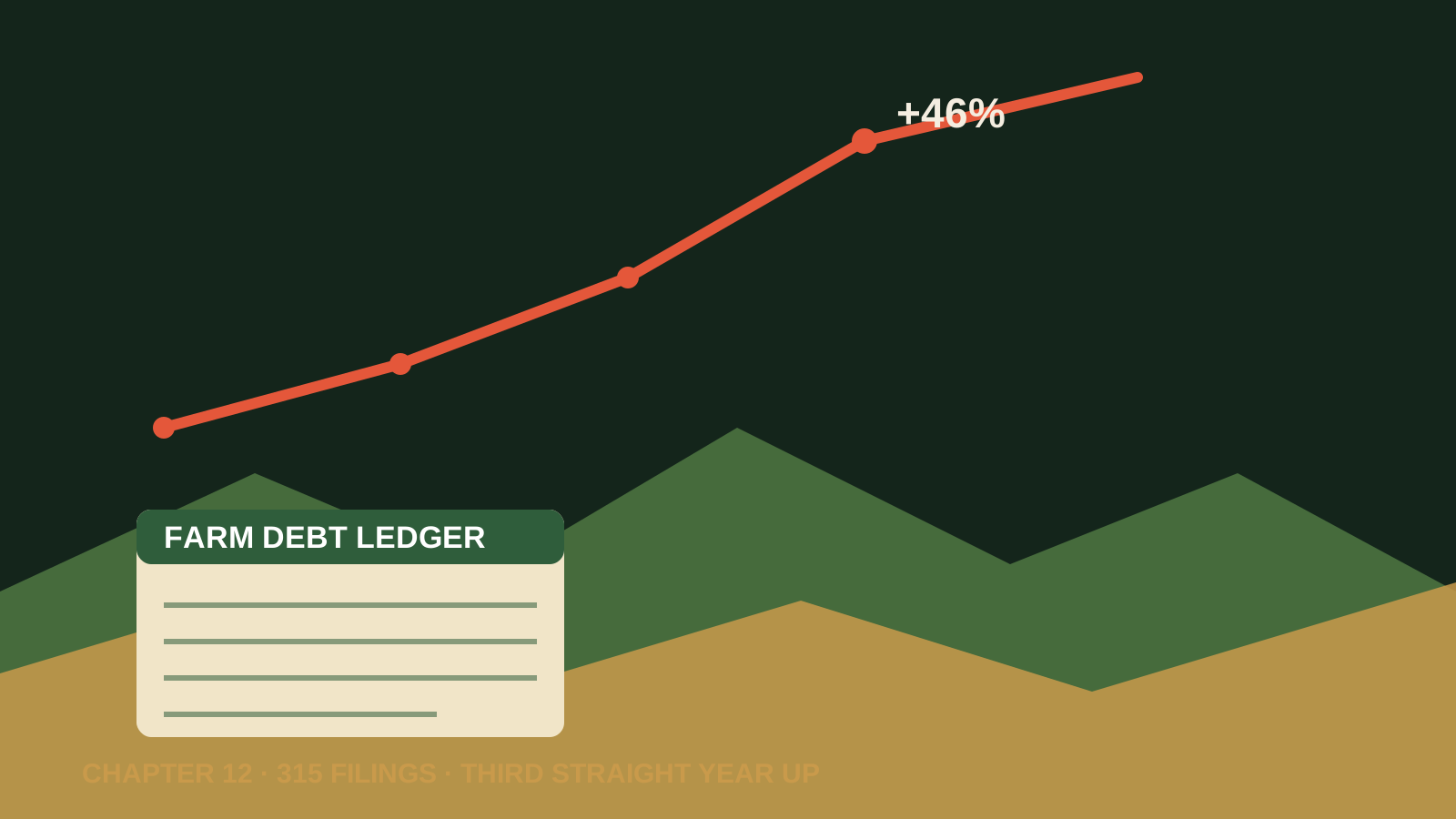
Here’s the number that frames everything else: Chapter 12 farm bankruptcies rose 46% in 2025 to 315 filings—the third straight annual increase, according to the American Farm Bureau Federation’s market intel. Chapter 12 is the bankruptcy chapter Congress built specifically for family farmers. When it climbs three years running, that’s not a blip. That’s a trend line with a direction.
And the direction is bad in exactly the places you’d worry about most.
The map tells on itself
The filings didn’t spread evenly. The Midwest saw filings jump about 70%, and the Southeast was up roughly 69%—the Corn Belt and the row-crop South, the regions that grow the calories and carry the debt. These aren’t marginal operations getting shaken out. They’re the mid-sized family farms that a decade of thin margins has left with no cushion.
Zoom out and the churn is bigger than the bankruptcy docket. USDA data compiled by the Farm Bureau shows roughly 15,000 small farms closed or consolidated in 2025, as Cowboy State Daily reported. Bankruptcy is the loud exit. Most farms leave quietly—sold to a neighbor who’s already big, or to the capital that’s been circling the land. That quiet exit is the land grab we’ve been tracking from the other end.
Why 2026 isn’t turning the corner
The math underneath is stubborn. Net farm income has now declined for four consecutive years, and farmers are increasingly borrowing to cover operating costs—seed, fuel, fertilizer—rather than to invest in the operation. Total U.S. farm debt is projected to reach a record in 2026, according to USDA estimates cited in analyses of rising agricultural distress. Debt taken on to keep the lights on doesn’t build anything. It just moves the reckoning to next season.
Layer on the structural stuff we cover on this desk: input prices set by a handful of consolidated suppliers, and equipment you’re legally boxed out of repairing yourself without the manufacturer’s blessing. Every one of those is a small, permanent tax on staying independent. None of them shows up as a bankruptcy filing until the year the margin finally goes negative.
The policy that’s actually moving
It’s not all grim. The Farm Bill that cleared the House in April 2026 carries provisions expanding access to credit and extending the Conservation Reserve Program—both of which land directly on small operations. Credit access is a double-edged tool (more debt is how a lot of these farms got here), but paired with CRP payments for taking marginal ground out of production, it’s a real lever for operators trying to hold on.
State-level right-to-repair laws are also stacking up, and EPA repair guidance has given them teeth. That’s the difference between a farmer fixing a sensor in the shop and paying a dealer’s road call at planting-time rates—the kind of margin that decides whether a borderline year ends in the black.
What we’re watching
The Chapter 12 counter in our War Room is the tell. If 2026 filings run ahead of 2025’s 315, the squeeze is accelerating and the House Farm Bill provisions—assuming the Senate moves them—are arriving late. If filings flatten, it means the credit-and-CRP lifeline is doing something. Either way, the headline isn’t any single farm sale. It’s the debt load underneath all of them, and which direction it’s pointing when the harvest checks clear.
Sources: American Farm Bureau Federation Market Intel; USDA farm-sector data via Cowboy State Daily; agricultural-distress analysis (Adams and Reese). Debt and income projections are USDA estimates and are subject to revision.


