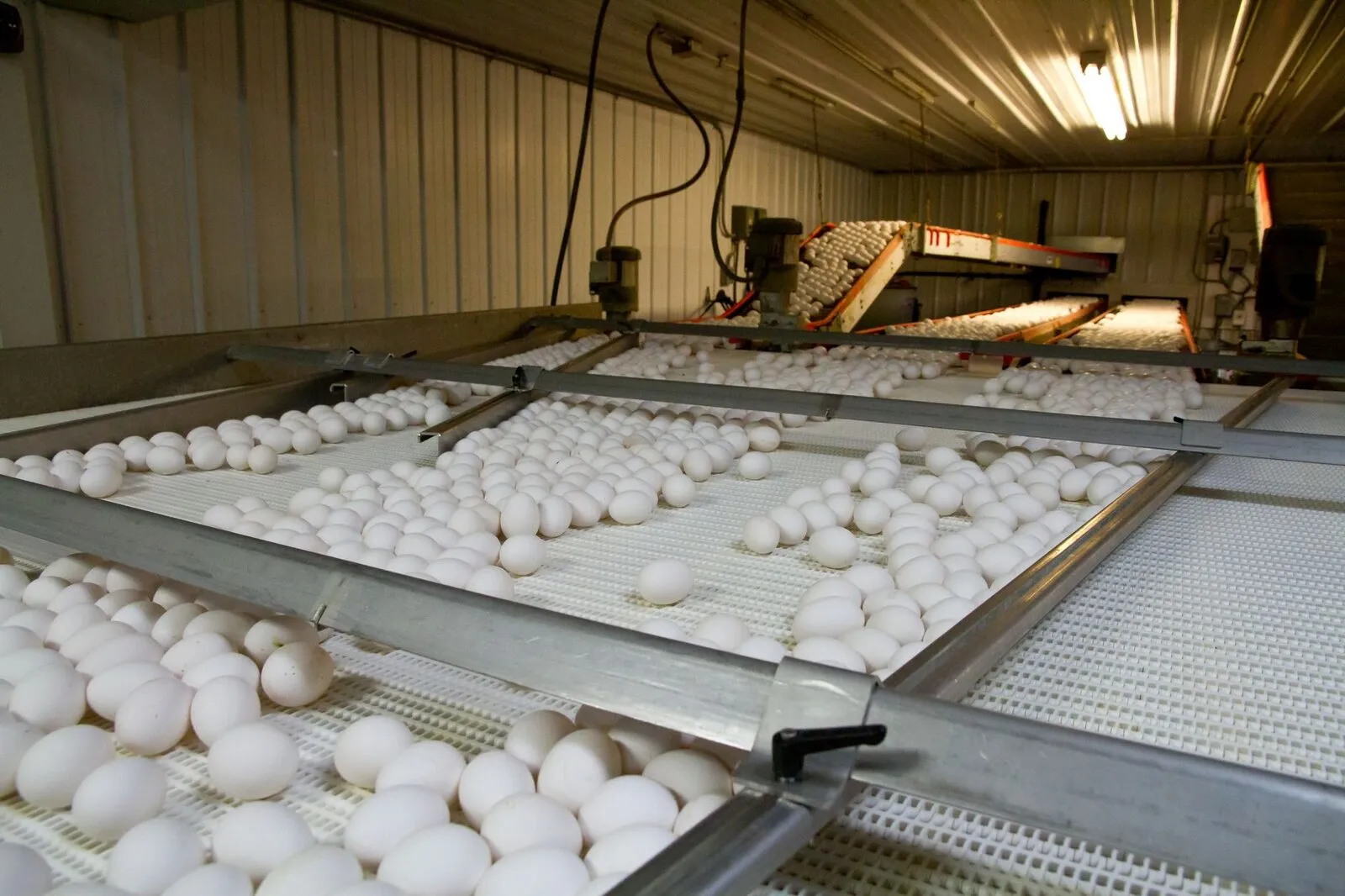
Every week, federal investigators track between 17 and 36 foodborne illness outbreaks across the United States serious enough to warrant federal attention. Industrial livestock farming, the Environmental Working Group concluded in a June 2026 analysis, is a main cause.
That finding is not a surprise to food safety researchers. It is a predictable outcome of how the meatpacking and poultry industries have organized themselves — concentrated in facilities that process enormous volumes of animals, where a single pathogen entering the production line can contaminate product shipped to hundreds of buyers across dozens of states before the first case of illness is even reported.
What scale does to risk
The logic is basic. A small farm selling meat regionally through a local processor limits outbreak exposure by geography and volume. When a pathogen reaches a small processing facility handling a few hundred animals per week, the worst-case scenario is a regional recall and a temporarily shuttered plant.
The same pathogen reaching one of the country’s largest slaughter facilities — which may process tens of thousands of animals per day — enters a national distribution system before anyone gets sick. By the time epidemiologists connect illness cases to a source, contaminated meat may be in refrigerators across the country.
According to EWG’s analysis, the United States recorded nearly 10 million cases of foodborne illness in 2019 — the most recent year with complete surveillance data — including almost 1,000 deaths attributable to E. coli, salmonella, and related bacteria. Industrial livestock operations are a primary origin point for both pathogens in the human food supply.
USDA’s Food Safety and Inspection Service maintains inspectors at federally regulated processing facilities and requires processors to implement Hazard Analysis and Critical Control Point plans. HACCP is a real requirement with real compliance obligations. What it doesn’t change is the fundamental arithmetic of scale: larger facilities process more animals faster, with larger exposure per contamination event.
How consolidation built the single points of failure
The U.S. beef, pork, and poultry processing industries consolidated dramatically in the decades following World War II, accelerating sharply through the 1980s. USDA’s Economic Research Service has documented how the number of independent slaughter facilities fell steeply as the surviving facilities grew to handle far larger shares of national supply. Four companies now account for the overwhelming majority of federally inspected beef in the country.
That concentration is the same market structure the DOJ’s Antitrust Division confirmed in May it is investigating for potential anticompetitive conduct in cattle markets. The food safety implications of consolidation and the competition implications of consolidation come from the same source: a handful of facilities control so much throughput that a disruption — whether from pathogen contamination, a labor action, or a plant closure — ripples through the entire national food supply.
When a large packer had a contamination event in the 1970s, the outbreak was geographically contained. The regional processor structure that still existed at that time meant contaminated product didn’t travel far. That regional structure is largely gone. The economic efficiency that drove consolidation came at the cost of the distributed architecture that once made individual failures local.
The regional alternative
Regional food systems — shorter supply chains with more processing facilities spread across more geography — distribute biological risk the same way they distribute market power. A pathogen that reaches a local processor stays local. A recall of product from a 200-animal-per-week facility is an inconvenience; it is not a multistate public health crisis.
This connects directly to the forces pushing family farms into Chapter 12 bankruptcy. An independent producer who can sell through regional markets has an alternative to the Big Four processing channel. When that alternative erodes — because small processors close, because regional cold-chain infrastructure disappears — the independent producer becomes dependent on the consolidated system that sets prices at the farm gate and controls the only available path to market. Lose those alternatives and family farms don’t just lose income; the food system loses resilience.
The economics of that dependency create a reinforcing loop. Consolidation squeezes producers. Squeezed producers cut operating costs. Cuts to labor and maintenance at the facility level increase the risk of contamination events. The same market power that extracts value at the farm gate shapes conditions at the processing plant.
The contamination picture beyond the slaughter line
The food safety risk from industrial agriculture doesn’t begin and end at the processing plant. Industrial livestock operations produce concentrated animal waste. What happens to that waste — where it goes, what it carries, how it moves through soil and water — shapes contamination risk for communities far from the source.
The herbicide paraquat’s documented links to Parkinson’s disease represent one dimension of the industrial agriculture chemical picture. California’s recent action to restrict certain PFAS-linked pesticides is another indicator of how contamination from industrial farming practices moves through waterways and into communities well beyond the individual field or facility.
EWG’s research has traced these pathways across multiple lines of analysis. The consistent pattern: concentration increases exposure. Thousands of animals confined in a single facility, with waste managed in centralized lagoons and applied to adjacent fields, create contamination pressure that smaller diversified operations don’t produce at the same intensity or scale.
What to watch
USDA FSIS publishes product recalls and safety alerts as they occur. The CDC’s foodborne illness surveillance data, tracked through the FoodNet program, offers a population-level view of whether the current regulatory approach is narrowing the gap between outbreak frequency and meaningful accountability.
The structural question remains largely unaddressed: the market organization that produced today’s consolidation was built over decades, and it will not be changed by HACCP compliance plans and recall notices. The DOJ’s antitrust investigators are beginning to ask whether the competition picture is sustainable. The food safety picture raises the same question from a different angle.
Factory farms didn’t create foodborne illness. They designed a food system where a single contamination event can reach every region of the country before the problem is visible. That is not an inspection failure. It is a structural one.