On June 17, U.S. Citizenship and Immigration Services (USCIS) issued a formal policy memo clarifying that dairy operations may qualify for the H-2A temporary agricultural worker visa program when they can demonstrate a temporary or seasonal labor need — even in an industry traditionally viewed as year-round.
The guidance removes a major barrier that had locked dairy farmers out of the H-2A program for decades. USDA welcomed the clarification, noting it provides “additional certainty” for an industry facing acute labor shortages.
Why dairy was blocked
The H-2A program has long been the primary legal pathway for U.S. agricultural employers to hire temporary workers. But the program requires employers to prove their labor need is temporary or seasonal — language that didn’t fit dairy’s year-round operations. For years, dairy farmers argued that while their overall business is continuous, they have genuine seasonal and temporary staffing needs: calving season, spring pasture transitions, harvest time, and periods of higher milk production. USCIS had interpreted the law strictly, denying dairy petitions.
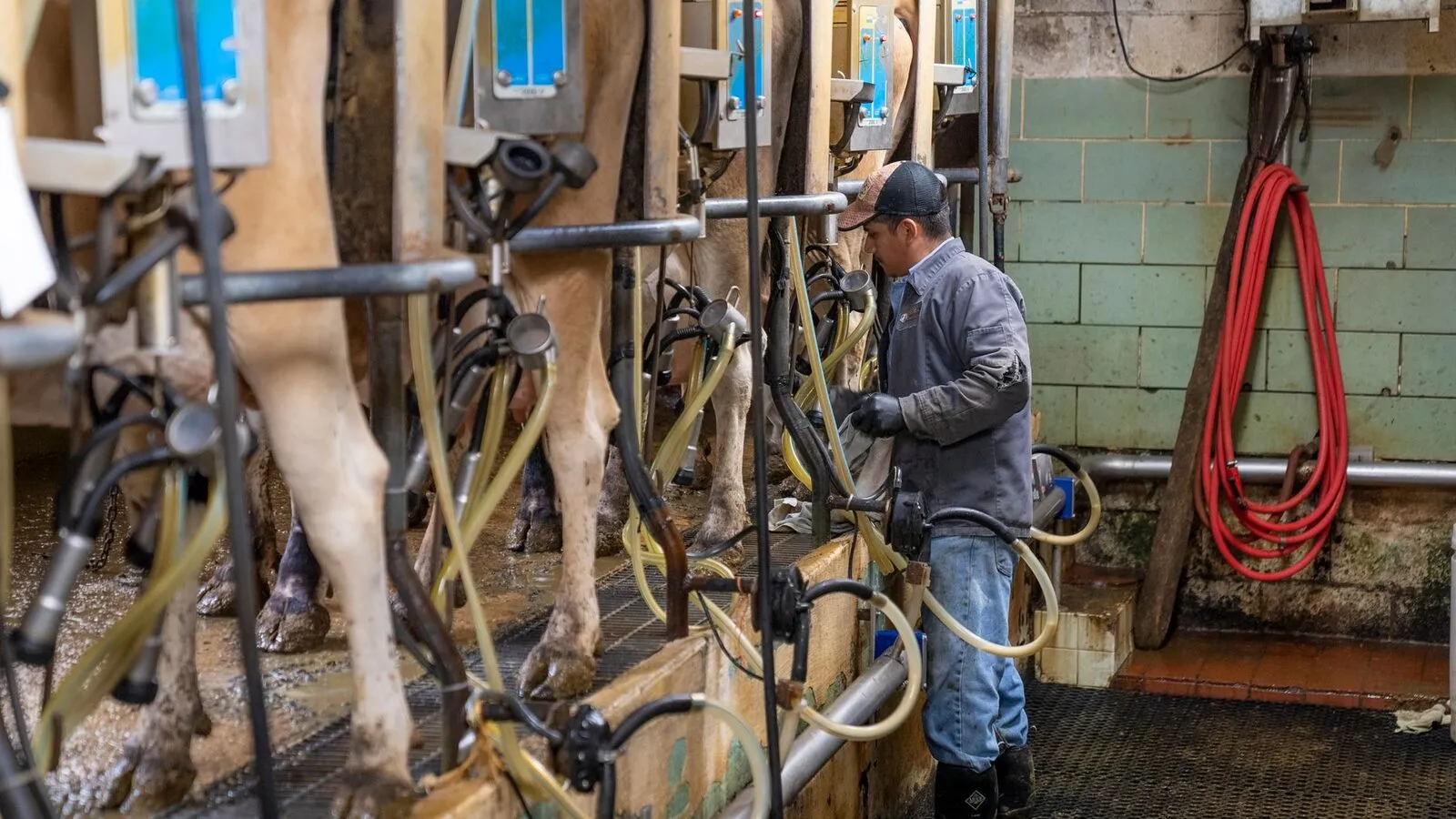
The bottleneck mattered. The U.S. dairy industry faces a chronic labor shortage, with dairy farms struggling to find both permanent and temporary workers willing to do the physical, round-the-clock work of dairy production. Labor costs have climbed sharply as a result, squeezing farm margins alongside feed and fuel prices.
What changed
USCIS’s new memo (PM-602-0200) does not change the fundamental H-2A requirements — employers must still recruit U.S. workers first, pay prevailing wages, and provide decent working conditions. What it does is clarify the legal pathway: dairy farms can now petition for H-2A workers by demonstrating a specific, documented temporary or seasonal need, evaluated case-by-case.
The memo’s language matters: “Where employers can demonstrate a temporary or seasonal labor need, even in an industry traditionally viewed as year-round,” petitions will be considered. That’s the opening.
Who benefits
Immediate winners are large and mid-size dairy operations that have the resources to navigate H-2A paperwork and afford the visa and recruitment costs. Cornell’s agricultural workforce program notes that “restrictions still apply,” underscoring that not all dairy farms will qualify or find H-2A practical.
Dairy worker advocates see a more complicated picture. More visa access could ease labor pressure on dairy farms, potentially stabilizing wages and working conditions — or it could suppress wages by expanding the legal labor supply without enforcing wage protections rigorously. The memo preserves the existing H-2A wage and recruitment rules, but enforcement remains uneven.
For farmworkers already in U.S. dairy, the guidance doesn’t directly change their situation. H-2A programs have a history of worker rights abuses despite legal protections, and the scale of dairy’s adoption of H-2A will determine whether the program becomes a significant pathway or a niche tool for larger operations.
The broader context
The guidance arrives as U.S. agriculture faces a generational labor crisis. Many farm sectors depend on undocumented workers; others, like dairy, have long relied on a mix of permanent hires and visa programs. The dairy industry specifically has lobbied hard for H-2A access, arguing it’s essential to competitiveness and food security.
This memo suggests the Trump administration is willing to interpret labor law more flexibly where agricultural sectors can make a business case. Whether that leads to wider H-2A adoption in dairy — or remains a narrow opening — will depend on how many farms navigate the process and how strictly USCIS and the Department of Labor enforce wage and working-condition requirements.
For farmworkers, the stakes are clearer: a loosening of visa access without commensurate enforcement of labor standards could drive down wages and conditions across U.S. dairy. Conversely, regulated H-2A access could offer documented workers formal rights and protections that undocumented workers never get.
The memo is a signal. Whether it helps or harms farm labor depends entirely on what happens next.